


The global education landscape has been impacted by the pandemic, altering traditional teaching methods. Vice Principal Chu Ka-tim shared that current teaching often employs information technology-based approaches, which are more effective in fostering students' information literacy compared to traditional methods.
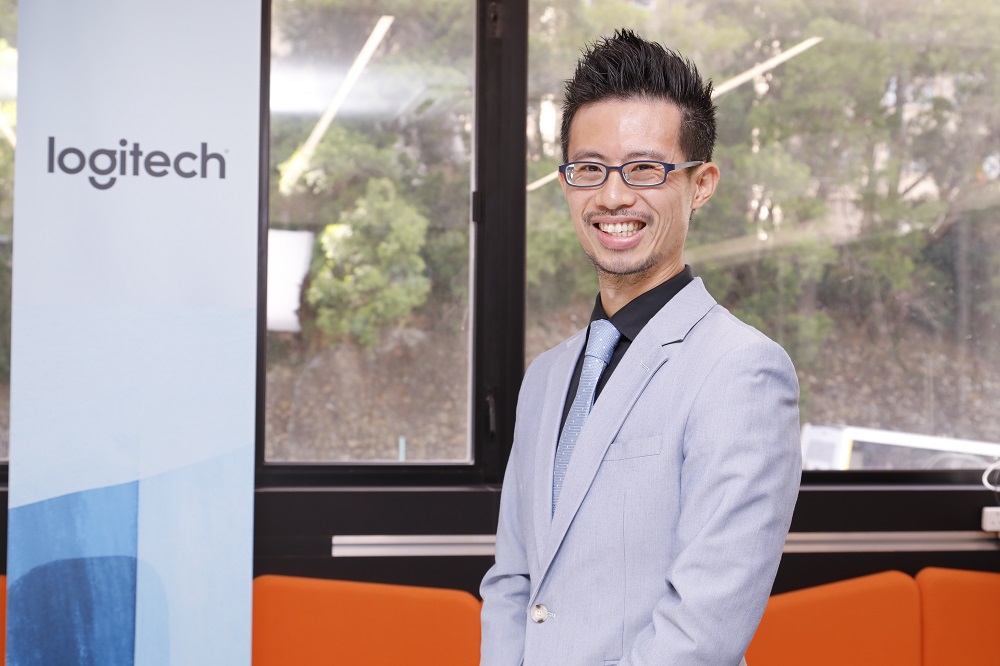
During the pandemic, teachers fully utilized technology for instruction, such as real-time teaching or students practicing instantly at home, using online platforms to complete or submit assignments for grading. Samuel Wong, Logitech Brand Operation Development Manager, stated that technology is constantly evolving, with many new products and techniques available to improve teaching quality. This is especially true for schools with diverse teaching needs, which require high-tech products. "Since the pandemic began, many schools have acquired remote teaching-related products, but they may not be effectively utilized or integrated. Therefore, our brand provides support for teaching and offers solutions for effective classroom use. Logitech collaborates with schools, visiting their premises to understand their needs, and then provides comprehensive support by integrating existing products to meet their practical requirements."
Supporting Teachers in Instruction
With technological advancements, how do Logitech products enhance teaching quality in schools? How do they positively inspire more diverse teaching models?
Vice Principal Chu Ka-tim of True Light Girls' College, Hong Kong, stated that the technology used in teaching varies by subject. "For hands-on subjects like computer science, visual arts, home economics, and physical education, students facing problems cannot receive immediate face-to-face guidance. Previous tools did not allow teachers to teach with a tablet while writing on a whiteboard simultaneously. Furthermore, the limited screen size of tablets affected the content teachers could present, often requiring them to erase and rewrite. With the addition of Logitech's Scribe AI whiteboard camera and the MEETUP all-in-one camera, which combines camera, microphone, and speaker functions, images can be transmitted in real-time. Even if an entire class or individual students attend remotely, they can instantly discuss and ask questions. When the pandemic subsides and schools resume normal classes, the new system can record lesson content, helping students review anytime after class."
During class suspensions, Sun Shing-wai, head of the school's IT department, felt that many teachers needed to adapt to online teaching, holding textbooks and tablets while writing equations on screen. Previously, they could focus on teaching, but now they spend time learning electronic tools, which hinders smooth instruction. "Perhaps with smart technology software, time can be concentrated on learning, especially with the Scribe whiteboard camera. Its AI technology allows it to 'see through' the teacher, so students' view is not obstructed by the teacher's body, displaying 100% of the text on the whiteboard. The camera also enhances content clarity, and key points can be presented with sticky notes, eliminating the need to frantically hold a book and write on a tablet. With this equipment, even teaching through a screen feels like face-to-face instruction."
Regarding daily teaching, Tsang Chi-wai, an IT technician specializing in supporting school IT matters, stated that because teachers are accustomed to in-person teaching, switching to remote teaching can be somewhat uncomfortable. To allow teachers to focus on teaching, he suggested that schools acquire the MEETUP all-in-one camera. Its special feature is a wider viewing angle of up to 120 degrees compared to ordinary webcams, coupled with omnidirectional sound pickup, ensuring clear audio regardless of distance. This eliminates the need for small tablet screens, or having to 'stand still' during video lessons to accommodate the camera, or using an additional handheld microphone or headset. He felt that the equipment allows teachers to teach in a more familiar and natural way."
Facilitating Learning Needs
Student Lee Yin-ling shared that attending classes online outside of school, in addition to network limitations, was mainly affected by the instability or delays of the tools used by teachers, and faint handwriting, which impacted learning progress. "This time, seeing the teacher use new tools in class, it has improved the problem of reflections from sticky notes on the whiteboard. The handwriting input is smooth and clear, and messages can be sent instantly, making remote lessons clear to see." Regarding the requirements for an ideal classroom, she believes it doesn't necessarily need to be high-tech or spacious. The most important thing is to be people-oriented and suitable for the needs of the lesson. "Especially when teaching steps in scientific inquiry, numerical equations, and other subjects, using smart technology for teaching not only increases the fluidity of the teaching process but also improves learning efficiency."
Students Cheng Hiu-yan, Leung Yau-sze, and Lui Hoi-kei believe that regardless of the high-tech equipment used, the most important thing for a school is to have a good learning environment and atmosphere. "I feel that learning in the library using video conferencing, unlike in the past where the teacher often blocked the camera's view, allowing me to see the whiteboard content clearly. The camera's field of view is also wider than before, and it has automatic movement and adjustment, so everything in the lesson can be clearly seen. The only slight drawback is that the technology is so advanced that the teacher becomes 'transparent,' and I see the teacher less." They also shared that the most ideal classroom should have good lighting and ventilation. "In addition to these high-tech facilities, if the images seen could be 3D and the seating could accommodate the user's body size to prevent poor posture from sitting for long periods, that would be ideal!"
Product information: https://lp.logitechclub.com/vc/


