


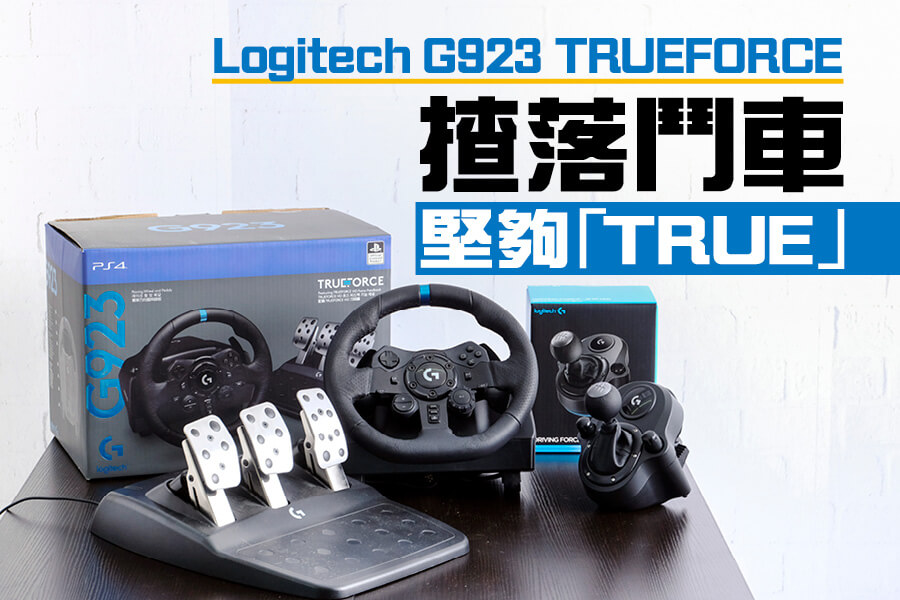
Logitech G923 TRUEFORCE
Hands-on review of a hyper-realistic racing experience
Today's games demand not only more detailed graphics but also a sense of realism for the player. When it comes to racing games, the racing feel is paramount, and a good steering wheel is indispensable. Logitech coincidentally lent me a G923 TRUEFORCE for a hands-on review, so I decided to give it a try.
I've been a racing game enthusiast since childhood, and now I also enjoy driving real cars. For this review, I'll be evaluating how closely this steering wheel replicates real driving. This unboxing and test of the Logitech G923 TRUEFORCE, the version sold in Hong Kong, supports PC, PlayStation 4, and 5. Compared to its predecessor, the G29 DRIVEFORCE, this generation aims for a more realistic racing experience with its new and exclusive TRUEFORCE system, which combines physics and audio engines. It samples feedback at up to 4,000 times per second, aiming to let players feel road changes and even engine vibrations. However, it's worth noting that the TRUEFORCE system depends on game support. The games I primarily used for testing, "Gran Turismo Sport" and "Dirt Rally 2.0," both support it. If you play on PC, you can also download Logitech's G HUB to adjust steering wheel sensitivity, force feedback, and other settings according to your personal preferences or the needs of different games.
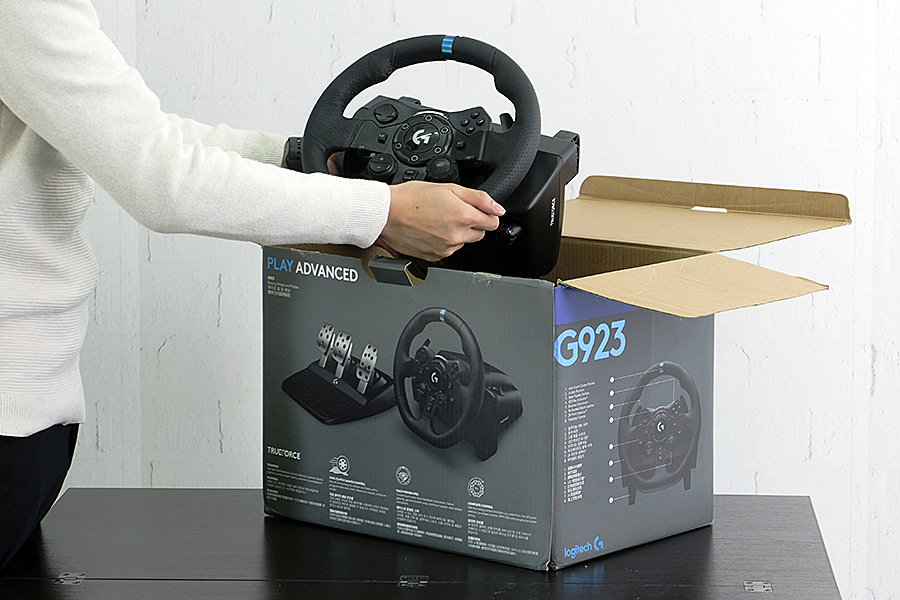
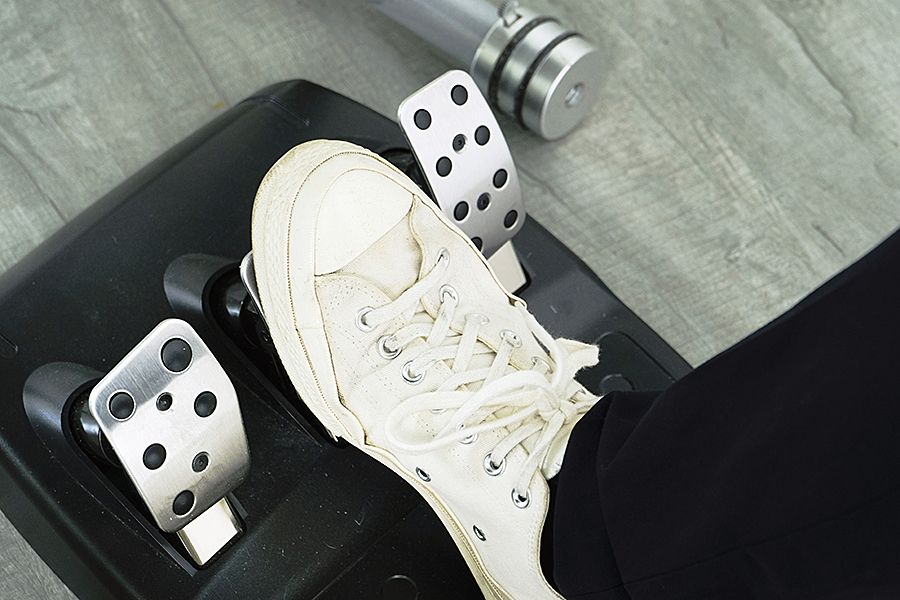
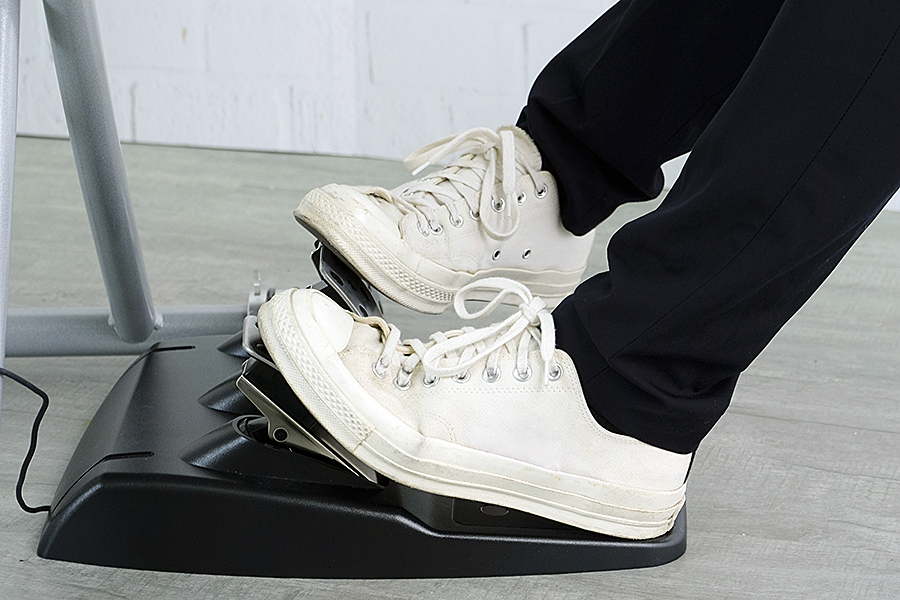
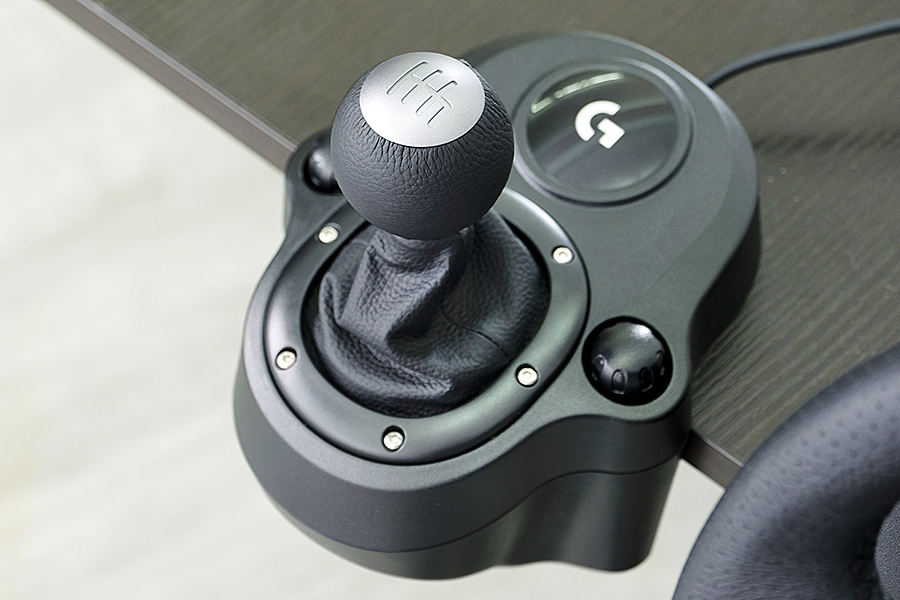
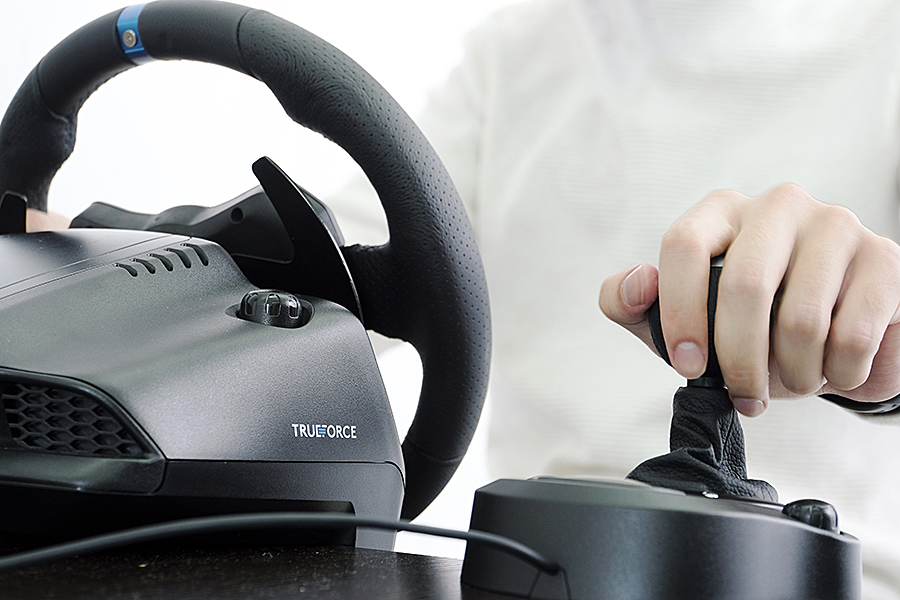
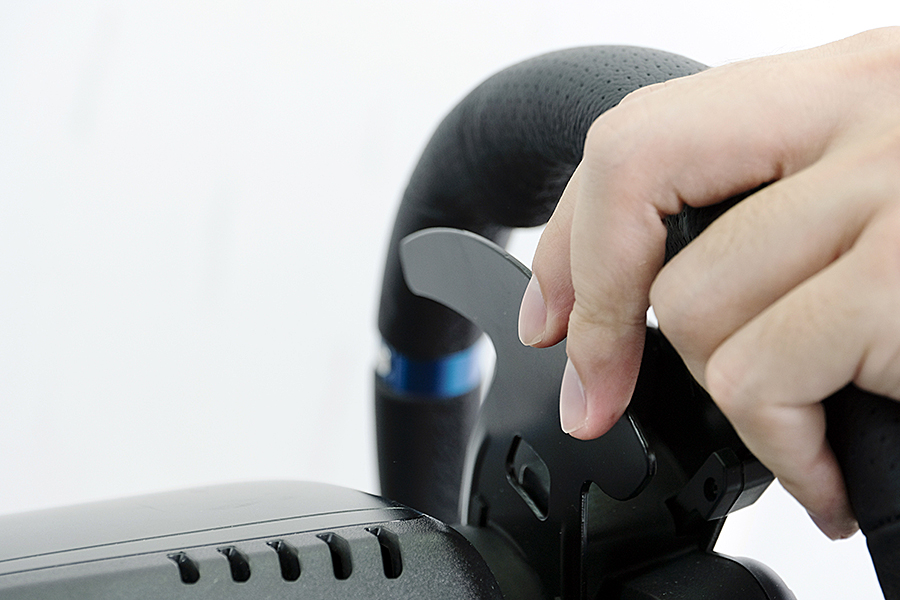
Before the actual test, I naturally had to unbox and inspect all the hardware. The complete G923 set includes three components: the steering wheel, pedals, and power adapter. The 11-inch diameter steering wheel is clearly racing-oriented, smaller than typical daily-use car steering wheels. The wheel is wrapped in hand-stitched leather, and the traditional three and nine o'clock positions feature specially designed indentations for a good grip. It also retains several features from the previous G29, such as the center indicator line on the steering wheel, high/low RPM LED lights, and clear paddle shifter sounds. The pedals are also meticulously crafted, with aluminum pedal faces and anti-slip rubber dots, so you don't have to worry about mistakes even when playing barefoot at home. Upon closer inspection, the brake pedal is slightly higher than the accelerator, similar to a real car's setup, and the distance between them is not too far, making it suitable for the necessary "heel-toe" technique for driving manual transmission cars. There's also a clutch pedal, which can be used with an optional six-speed shifter, perfect for fans who crave the experience of driving a manual car.
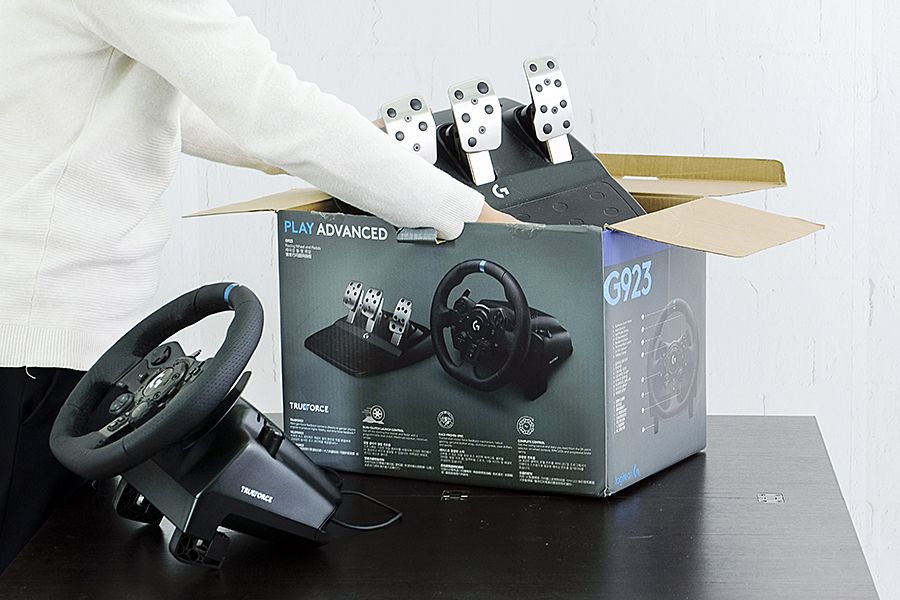
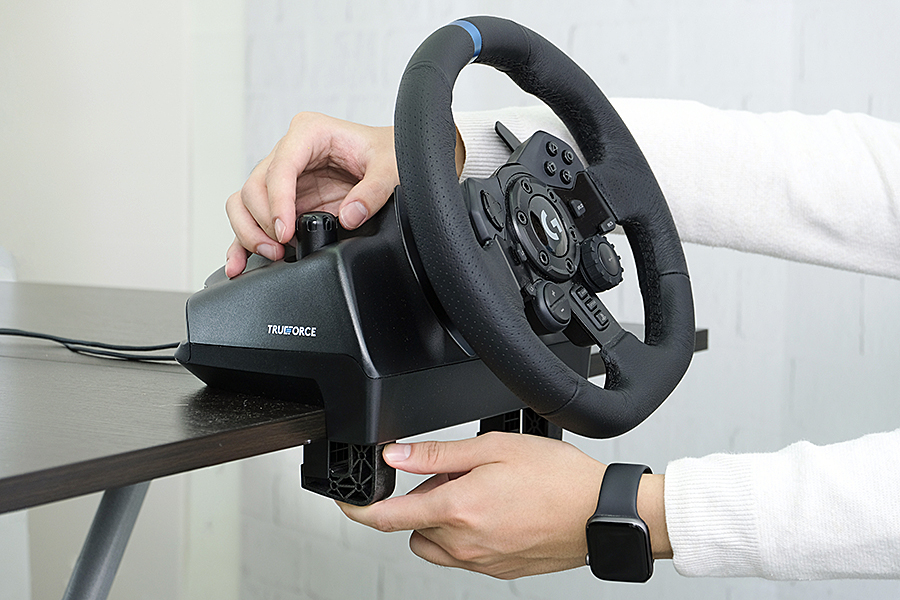
The next step is to set up the steering wheel. The first thing to note is that the clamp at the bottom of the steering wheel, designed for attaching it to a desk, only accommodates a maximum thickness of about 32mm. If your table is too thick, it won't be able to clamp on, and my coffee table in front of the TV was one such example. If you encounter the same situation, there are generally two solutions: one, splurge on a Play Seat for a full-on setup; two, simply replace the table with a thinner one. Of course, I chose the latter and brought a thinner coffee table from my study to substitute.
Once everything was ready, it was time to dive into the game. I first launched "Gran Turismo Sport," which I play quite often. After connecting the steering wheel to power and the console with its USB cable, it initially rotated left and right as it powered on. Upon entering the game, pressing the PS button located at the bottom of the steering wheel connected it. I started with a free practice session to get a feel for the steering. My immediate impression was that the brakes were extremely heavy, much heavier than those in a typical private car. Of course, this simulates a real racing car without brake assist, but it took some getting used to. Even for someone who isn't new to driving or racing games, it requires some adaptation.
After some casual practice, I decided to take on a challenge: the Nürburgring, a racing paradise with continuous ups and downs and winding turns. With a lap length exceeding 20km, I thought it would be a good test to see if this G923 steering wheel was as "tough" as it claimed. It didn't take long, just past the main circuit area and into the Nordschleife, to experience its power. This was "thanks" to me accidentally driving onto the grass, causing the car to skid out of control and spin. The steering wheel immediately provided an extremely strong counter-force, and I had to react quickly and firmly grip the wheel, spinning it 540 degrees, or 720, or even more, I lost count. In a real-life scenario, even if my beloved car hadn't crashed into the track barriers, it would have taken quite a while to regain my composure.
Another memorable moment was at the famous Karussell corner on the Nürburgring Nordschleife. This hairpin turn is known for its 30-degree banking and concrete surface that aids cornering, requiring careful navigation from entry to exit. For an amateur like me, making mistakes when entering or exiting this corner was expected, but it allowed me to better experience the track feedback provided by the G923. Moving from the asphalt road to the concrete surface of the corner's apex, the steering wheel immediately delivered a stronger vibration. It felt almost identical to when I drive out of the Central-Wan Chai Bypass exit towards Chai Wan on the Eastern Corridor, transitioning from the newly paved asphalt to the old concrete road. And when I entered the Karussell corner too quickly several times or accelerated too eagerly out of it, the car would easily skid. At these moments, the G923 clearly provided a feedback force, signaling to me that I needed to make corrections.
I then tried "Dirt Rally 2.0," which focuses on rally racing, and it seemed to be where the TRUEFORCE system really shone. The road conditions were distinctly different, and the steering wheel provided significantly more force feedback. For instance, on gravel or muddy roads, the steering wheel vibrated more intensely; when hitting puddles, the water resistance clearly caused the steering wheel to pull left and right. Furthermore, unlike "Gran Turismo Sport," which mostly features rolling starts, "Dirt Rally 2.0" uses standing starts. Holding the G923, I could feel the powerful pull of the steering wheel as the high-horsepower car accelerated abruptly from a standstill.
Overall, for a racing steering wheel priced at $3,499, which is considered entry-level in the esports world, the G923's level of realism is astonishing. It clearly provides feedback on many in-game car dynamics, allowing players to know when and how to correct their driving, making gameplay more intuitive. Of course, if you're looking for a higher level of sensation, such as body roll, a single steering wheel alone can't achieve that. But at least for me, someone who can't claim any professional esports driver skills, I felt I could improve my driving style and race more smoothly than before. It seems I should consider buying a set myself. (Perhaps I could daringly ask, Logitech, can I keep this steering wheel? Haha.)
Logitech G923 TRUEFORCE
Price: $3,499


